
I've been thinking about the disruption the Renaissance emerged from.
In the early 1400s, Europe was reeling. A pandemic that had reshaped the labour market within living memory. Institutions splitting into competing factions. Economic structures collapsing. A new technology about to change who controlled knowledge. Sound familiar?
The people in charge were frightened, and frightened people default to control.
That is the world that produced the Renaissance.
What the best leaders did when the old certainties failed.
The greatest period of human invention did not emerge because disruption was absent. It emerged because some people chose to create within the uncertainty rather than wait for it to pass.
You have heard me on the patron, the leader who funds the talent and stands back, and the salon, the small room where culture forms before it ever scales. This is where those two ideas meet.
The same era that gave us the patrons of Florence also gave us Machiavelli. One model brought people together across disciplines and backed them before the outcome was clear. The other documented what leaders actually do when the ground shifts: control the narrative, consolidate power, use fear because fear is reliable.
Same city. Same decade. Same uncertainty. Two very different legacies.
Five centuries on, both playbooks are still being run. Machiavelli's is everywhere on the world stage today, and it is very good at preserving power. It has never produced a Sistine Chapel.
The choice in front of leaders now is the one those two faced then. The choice in front of you. Preserve or create?
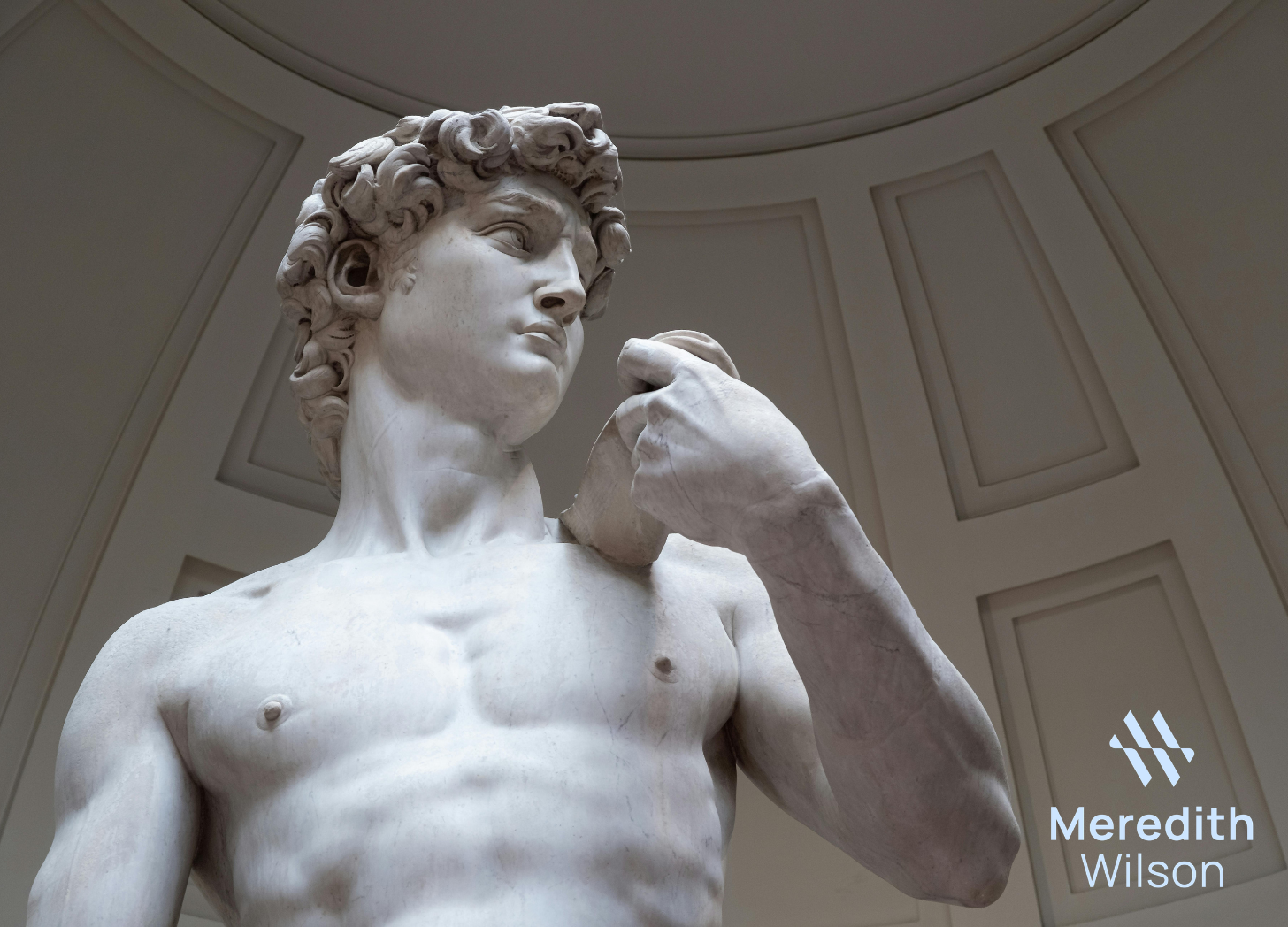
I believe one can never have too much Italy. What keeps drawing me back is the evidence of what happens when someone chooses to invest in people rather than protect a position. Florence is a city built by patrons. Walk through it and you are walking through the legacy of leaders who funded thinking they could not yet see the outcome of.
There are teams right now, inside your organisation, already working differently. Asking better questions. Experimenting with new approaches. Producing results the rest of the business has not yet noticed. These are your centres of learning. The leadership question is whether you find them, connect them and back them, or whether you keep managing the disruption from above.
Let's lead a Workplace Renaissance
This is an invitation. Not to lead a revolution. A revolution tears the institution down and gambles on what replaces it. A renaissance does something steadier. It finds the talent already in the building, gives it room and backing, and lets it remake the work/system from the inside.
The Renaissance was not a clean break from what came before. It was a rediscovery, a deliberate decision to bring the best thinking back into the light and build on it. You can lead the same thing where you are.
Where are the people in your organisation already thinking differently?
That is where I would start.
More soon
Meredith

PS If you've been waiting for Leading Culture's next intake, we are accepting applications now to commence in August. Learn more here.