A practical way to understand how organisational culture is built in layers, and how leaders can see more clearly where to focus when shaping and shifting culture.
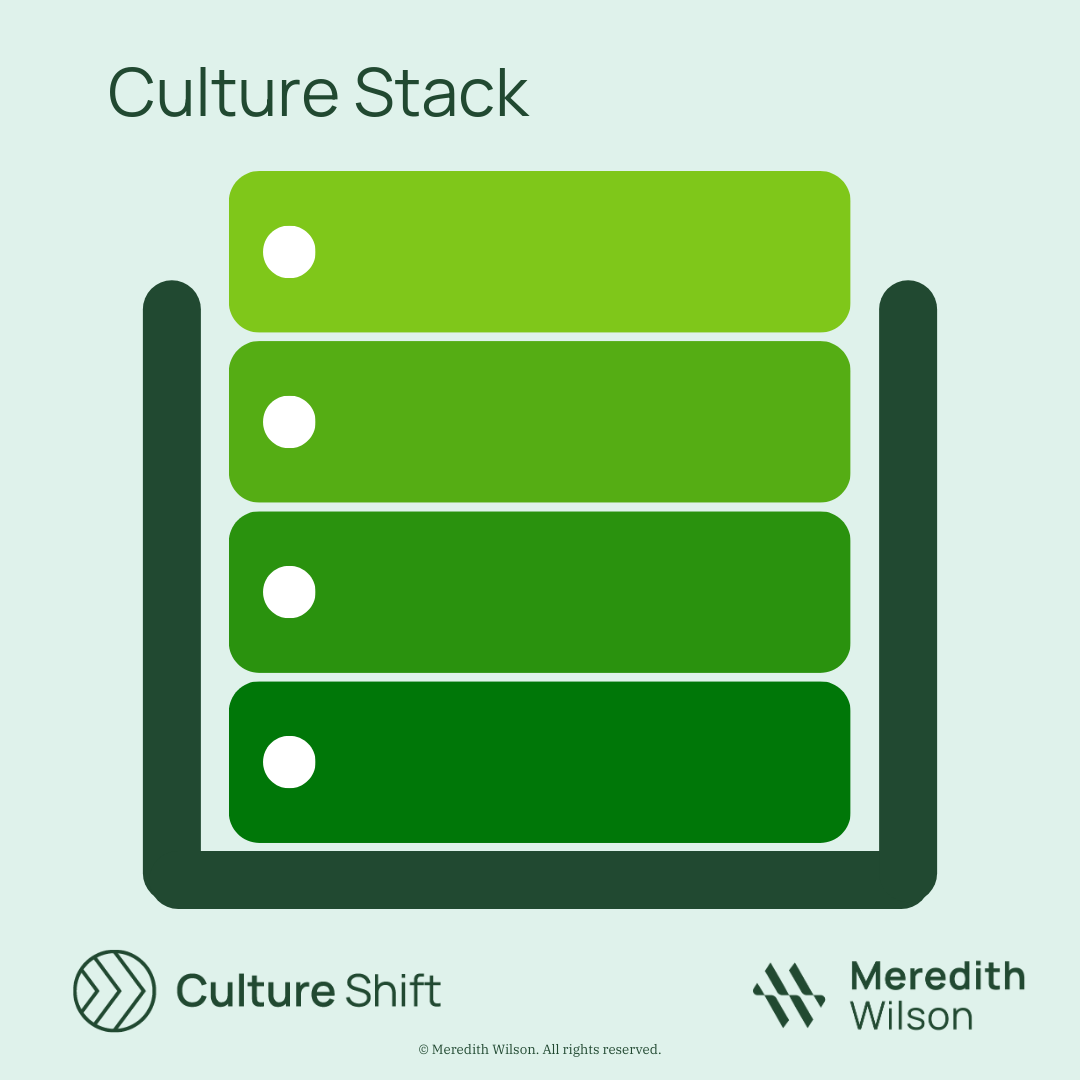
The Culture Stack Model
The Culture Stack is a way of understanding organisational culture as layers that build over time. Some layers are visible and easy to notice. Others sit deeper and shape behaviour in ways that are less obvious.
I developed the Culture Stack through my work with leaders and organisations to help them see culture more clearly before deciding how to change it.
What is the Culture Stack
Culture is often treated as a single thing. In practice, it is made up of many elements that accumulate and interact. Habits, expectations, decisions, language, systems and shared experiences all leave traces. Over time, these traces form layers.
The Culture Stack gives leaders a way to see those layers more clearly. It helps explain why surface changes sometimes fade quickly, and why shifts that reach deeper layers tend to last.
This framework is a way of seeing. Once leaders can see culture more clearly, they can work with it more deliberately.
Why the Culture Stack matters
Many culture efforts begin with what is most visible. New values are launched. Messaging is refreshed. Symbols and language change. These things can help, though they rarely shift culture by themselves.
One way I often explain this to leaders is to picture a stack of pancakes. What we notice first are the toppings. Syrup, berries, the finishing touches. They are visible and easy to change. Underneath are the layers that give the stack its shape and substance.

Culture works in a similar way. The visible elements draw attention first, though deeper layers shape how people interpret those signals. Leadership behaviour, operating rhythms, decision patterns and reinforcement all influence what people actually experience day to day.
Unless we look into the layers of the stack, we risk focusing only on the surface. Understanding the layers helps leaders see the true shape of a culture before they begin shifting anything.
When leaders understand the layers, they stop reacting to symptoms and start working with the causes.
How the Culture Stack works
The Culture Stack invites leaders to think about culture in layers rather than initiatives.
At deeper levels sit elements that have formed over time. These include long-standing norms, structural choices and patterns of behaviour that people take for granted. These layers move slowly, though they carry significant influence.
Above these are the everyday practices that actively shape culture. Leadership behaviour, meeting rhythms, decision-making habits and what gets recognised or challenged all reinforce what matters.
There are also visible signals and symbols that help people interpret culture. Language, rituals, stories and artefacts give meaning to what people see and experience. These are often the first things leaders try to change, though their impact depends on what sits beneath them.
At the surface, small changes often appear first. Different conversations, new expectations or shifts in priorities can signal that culture is beginning to move.
Culture rarely changes in a single moment. It changes as layers shift over time.
What the Culture Stack looks like in practice
A leadership team announces a new strategic priority. The message is clear and well communicated. At the same time, performance discussions continue to reward the same behaviours as before. Teams notice the gap and adjust accordingly. The visible message changes, though the deeper layers remain intact.
In another organisation, leaders begin to change how decisions are made. Trade-offs are explained openly. Input is sought earlier. Over time, teams become more willing to contribute and challenge ideas. The shift begins in behaviour and gradually becomes part of the culture people experience.
Small changes in deeper layers often have greater impact than large changes at the surface.
How to apply the Culture Stack
Leaders can use the Culture Stack as a lens when looking at their current culture or reviewing planned initiatives.
Start with the current culture
Ask:
-
What is most visible on the surface right now
-
What sits underneath and shapes those visible elements
-
Which habits, routines or expectations influence how work really happens
This helps distinguish between what is seen and what is shaping what is seen.
Then look at planned initiatives
When reviewing culture or transformation work, ask:
-
Which initiatives focus mainly on the surface
-
Which initiatives influence the layers underneath
-
Is there enough attention on deeper layers to support the change we want to see
Surface signals attract attention. Underlying layers shape behaviour.
Related frameworks
GRASS: Gatherings, Rituals, Actions, Symbols and Stories
SHAPE: The culture we all need for the now and next
These frameworks help leaders understand how culture is shaped day to day and how deliberate shifts take hold over time.
Further reading
If you are interested in the story and metaphor behind this model, you can read the article 'What pancakes can teach us about building cultures that work' here:
https://meredithwilson.substack.com/p/the-culture-stack
This article explores Meredith Wilson's Culture Stack through the pancake metaphor and reflects on what it means for leaders shaping culture over time.
Reflection
If culture in your organisation is layered, which layer is shaping behaviour most strongly right now?
Author
Meredith Wilson is a culture expert, speaker and author who works with leaders to shape, shift and lead culture. Through her programs, keynotes and mentoring, she helps organisations build cultures worth belonging to. Cultures that create capacity for the now and next.