The Cultureshift™ Formula Explained
The formula that explains why some culture initiatives work and others don't
The Cultureshift™ Formula is: Moments that matter × Multipliers = Chosen culture.
It breaks culture shift into two tangible variables. Moments that matter are the everyday interactions and decisions that have disproportionate cultural weight. Multipliers are the leaders who amplify what happens in those moments. When both are deliberately aligned, culture shifts from default to chosen.
What is the Cultureshift™ Formula?
The Cultureshift™ Formula is: Moments that matter × Multipliers = Chosen culture. It describes the mechanism by which culture shifts: the accumulation of everyday moments, amplified by the leaders who shape them.
What the formula names
Moments that matter are the interactions, decisions and micro-events that have disproportionate weight. They become the reference points people use to understand what is really valued, safe and rewarded. These moments happen constantly. The question is whether leaders are shaping them with intention or letting them happen by accident.
Multipliers are the leaders and people who amplify culture. What a leader models ripples. What they tolerate becomes the norm. What they celebrate becomes the aspiration. Every leader is amplifying something. A positive multiplier amplifies positive culture. A negative multiplier negates it.
Chosen culture is the outcome when moments and multipliers are aligned. It is a culture that exists by design rather than by default. Most organisations have a culture. Few have chosen one. Chosen culture is the result of deliberate, sustained attention to the moments and the people who amplify them.
Why the formula matters
The formula matters because it makes culture shift feel possible. Culture is often treated as abstract, unmeasurable or too complex to influence. The Cultureshift™ Formula breaks it into two tangible variables. Leaders can identify the moments that matter most. They can examine whether those moments are being shaped or left to chance. They can ask who is multiplying what.
It also names what goes wrong. When culture drifts, it is usually because moments that matter are going unrecognised or because the wrong things are being multiplied. The formula gives leaders a diagnostic. If the culture is not what you want, look at the moments. Look at the multipliers. One or both will tell you where the gap is.
Finally, the formula gives leaders a way to act. It begins with the next moment that matters and a decision about what to multiply through it.
At a glance
| Variable | What to observe | What it reveals |
|---|---|---|
| Moments that matter | The everyday interactions and decisions that have disproportionate cultural weight | The values the culture encodes in practice, beyond what it declares |
| Multipliers | What leaders model, tolerate and celebrate | Whether the culture being amplified is the one the organisation intends |
| Chosen culture | Whether moments and multipliers are deliberately aligned | Whether culture is the result of design or default |
Your Cultureshift™ Formula
The formula breaks when one component is missing. The question is which one is missing in your organisation.
→ What moments that matter are you currently multiplying, intentionally or by default?
→ Where is your multiplier aligned with your chosen culture, and where is it working against it?
→ What is the gap between your current culture and the culture your organisation needs?
The answers tell you where the formula is breaking and what to work on first.
About Meredith Wilson
Meredith Wilson makes culture simple and actionable. With over 15 years at the Executive and Board level in ASX10 and global teams, she has led culture through rapid growth, acquisitions, downturns and transformations. Now, as a speaker, author and mentor, Meredith works with senior leaders to shape, shift and lead culture, building the capacity needed for what's next.
Meredith delivers one-on-one mentoring, interactive masterclasses on culture and leadership and curated executive programs and experiences designed for senior leaders.
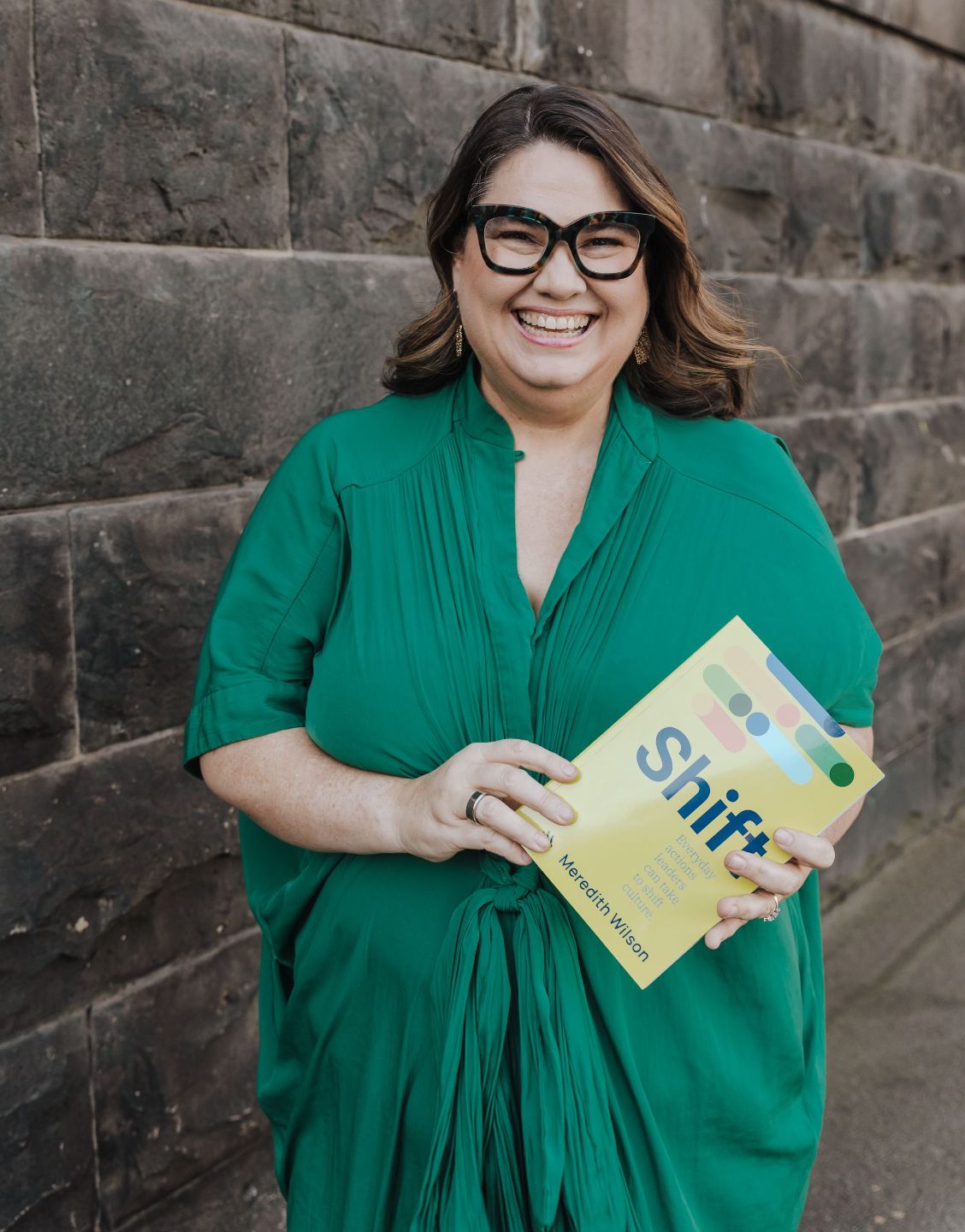
Meredith is the author of Shift: Everyday Actions Leaders Can Take to Shift Culture, a practical guide to making culture simple, tangible and actionable for leaders at every level.
Her depth of experience across people, culture and commercial leadership gives her a distinctive perspective. Grounded in operational reality, sharpened by three decades of practice.
Frequently Asked Questions
How long does culture shift take?
Culture shift is a multi-year journey. Quick wins are possible. Sustainable shift requires consistent application of the formula over two to three years minimum. The timeline depends on the size of the organisation, the size of the gap between current and chosen culture, and the consistency of the multiplier effect. Organisations that maintain alignment across all levels move faster than those working against internal resistance.
What if my multiplier is mixed? I model one thing but tolerate another.
This is the most common culture shift barrier. You have diagnosed the problem. The next step is closing the gap. Pick one behaviour you tolerate that runs counter to your chosen culture and stop tolerating it. Start with one. Make the conversation explicit. Explain why it matters to your culture direction. Most people change when they understand the logic. Then move to the next misalignment. This work is slow and uncomfortable. It is also the core of authentic culture leadership.
Can I shift culture without shifting moments?
Not sustainably. Leadership behaviour changes what people notice. Moments that matter make what you value concrete and repeatable. Without the moments, your behaviour looks like a campaign. Your people wait for the next campaign. With the moments, your behaviour becomes the culture. This is why the formula requires both components.
How do I know if the formula is working?
Culture shift shows itself in how people make decisions, how they handle conflict, how they treat each other when leaders are not watching, and how new people learn what is valued. It shows in the stories they tell about the organisation. It shows in retention of people who align with your chosen culture and departure of those who do not. You see it through close observation of actual behaviour over time.
What's your next step?
Cultureshift™ Masterclass
How leaders multiply culture. 90 minutes online or two hours in person. A practical experience in reading, shifting and leading culture.
Leading Culture
Shape, shift and scale culture. A 12-month program for leaders responsible for making culture work at scale.
Get the book: Shift
Everyday actions leaders can take to shift culture. Practical, grounded and written for leaders who want to act.
Explore More
Related Explainers
What Are Moments that Matter? — The five types of organisational moments that shape culture
Leaders as Multipliers — How your behaviour shapes culture at scale
Where Culture Shows Up in Everyday Organisational Life — Five tangible practices that make culture visible
Also Published
Culture Creates Capacity — Meredith's fortnightly reflections on leadership, culture and what's next
Stay connected with Meredith
Subscribe to Culture Creates Capacity, Meredith’s fortnightly reflections on leadership, culture and what’s next. Get insights, practical actions and early access to upcoming events and experiences.
We acknowledge First Nations people both here in Australia and around the world. We have the great privilege of working on lands that have had countless millennia of storytelling, learning, leadership and culture. We pay our deepest respects to the wisdom of Indigenous people and custom past, present and emerging.