
The Five Levers Explained
Five practices that shape the culture around you
Meredith Wilson
The five levers are five leadership practices that directly shape the culture around a leader: Consistency, Calibrate, Choice, Clarity and Curiosity. Each operates as a lever because small adjustments produce visible shifts in how a team functions. Together, they answer the question every leader is asking: what am I doing every day that is creating the culture around me?
What are the five levers?
The five levers are leadership practices that shape culture: Consistency, Calibrate, Choice, Clarity and Curiosity. They are the things leaders do every day that shape the culture around them. Each one operates as a lever because small adjustments produce visible shifts in how a team or organisation functions.
Why the five levers matter
Most leaders sense they shape culture. The five levers name how, and make the mechanism visible: what, specifically, am I doing every day that is creating or eroding the culture I want?
Consistency determines whether people can trust the pattern. Calibrate determines whether a leader is reading the room accurately and adjusting. Choice names the reality that leading culture involves trade-offs, and the willingness to make them deliberately. Clarity determines whether people know what matters and what is expected. Curiosity determines whether a leader and their team can learn, adapt and stay open.
Each lever connects to a different aspect of organisational performance. Together, they provide a practical self-assessment for any leader who wants to understand their own impact on culture.
Where the five levers sit in Meredith's work
The five levers sit within the Leadershift body of work. They are the leadership-side companion to the culture-side frameworks like SHAPE and GRASS. Where SHAPE describes what people need and GRASS makes culture visible in everyday practice, the five levers describe what leaders do to shape the conditions and the environment.
The framework is explored in Shift (2023) and is a core component of Meredith Wilson's leadership and culture programs.
At a Glance
| Lever | What to observe | What it reveals |
|---|---|---|
| Consistency | How reliably the leader’s behaviour matches stated expectations | Whether people can trust the pattern and predict what will be valued |
| Calibrate | How accurately the leader reads the room and adjusts | Whether the leader is in tune with their team’s actual state |
| Choice | How the leader navigates trade-offs and makes deliberate decisions | Whether culture is being shaped by intention or by avoidance |
| Clarity | How clearly the leader communicates what matters and what is expected | Whether people have enough direction to make good decisions without constant instruction |
| Curiosity | How openly the leader learns, questions and stays adaptable | Whether the team feels safe to explore, experiment and grow |
Your Five Levers
Most leaders default to one or two levers. Knowing which ones are running your culture is the starting point.
— Which of the five levers do you pull most reliably under pressure?
— Which one is least visible in your current leadership?
— What is that pattern creating in your team's experience right now?
The answers tell you which lever to pull next.
About Meredith Wilson
Meredith Wilson makes culture simple and actionable. With over 15 years at the Executive and Board level in ASX10 and global teams, she has led culture through rapid growth, acquisitions, downturns and transformations. Now, as a speaker, author and mentor, Meredith works with senior leaders to shape, shift and lead culture, building the capacity needed for what's next.
Meredith delivers one-on-one mentoring, interactive masterclasses on culture and leadership and curated executive programs and experiences designed for senior leaders.
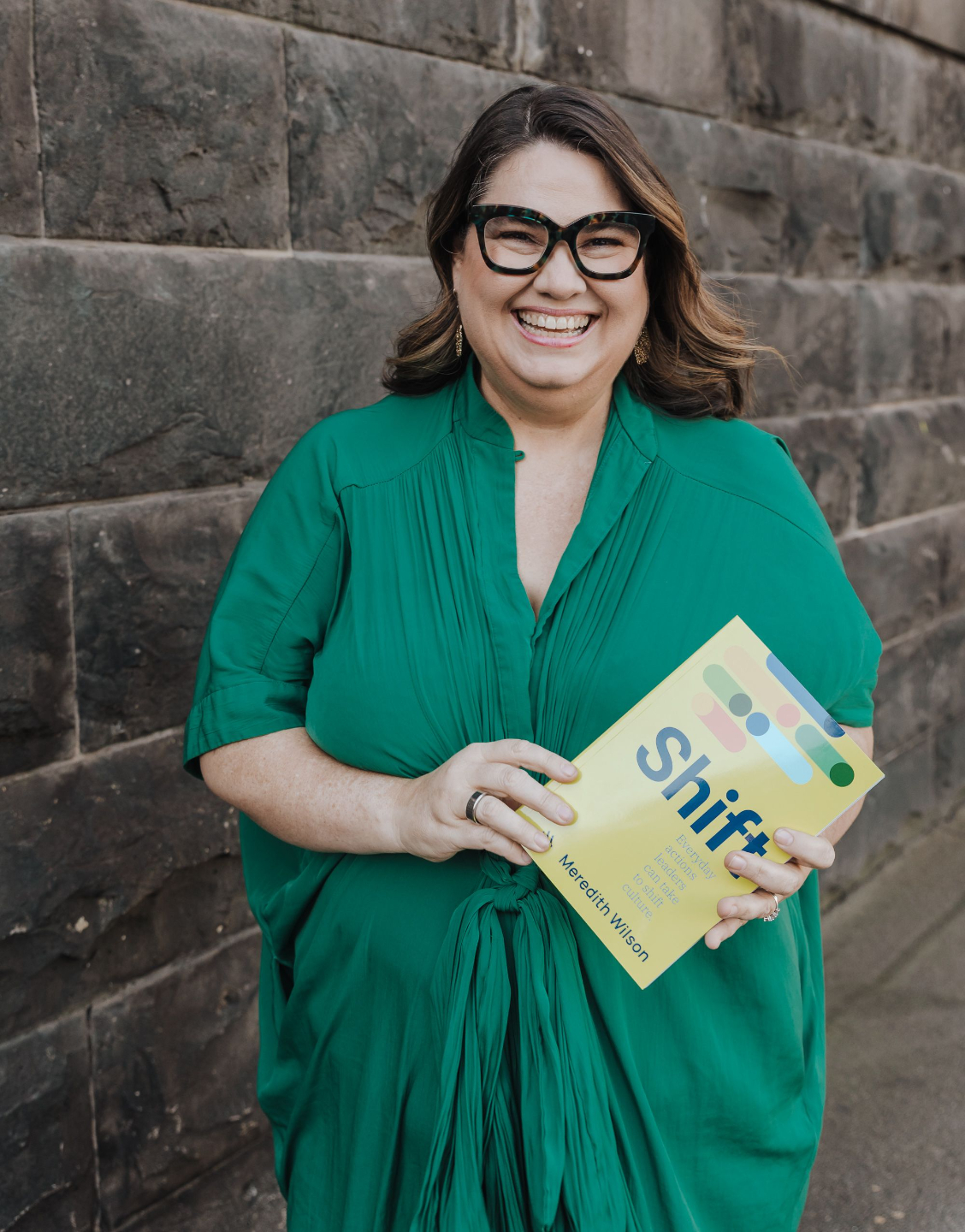
Meredith is the author of Shift: Everyday Actions Leaders Can Take to Shift Culture, a practical guide to making culture simple, tangible and actionable for leaders at every level.
Her depth of experience across people, culture and commercial leadership gives her a distinctive perspective. Grounded in operational reality, sharpened by three decades of practice.
FAQ
Can a leader pull all five levers at once?
No leader masters all five simultaneously. The work is noticing which ones you naturally use and which ones you avoid or neglect. A leader strong in Clarity but weak in Calibrate will create different problems than a leader who is the reverse. The power is in noticing which levers matter most right now and what impact they are having.
What if my organisation has poor culture and I am new to the role?
Start with Consistency. When you arrive into a troubled culture, the first thing people notice is whether you are predictable. Establish that you mean what you say, that you make decisions in alignment with stated values, and that people can rely on you. This creates a foundation. Everything else becomes possible once people know where they stand with you.
How do these Five Levers relate to the Culture Stack?
The Culture Stack helps you see what already exists. The Five Levers are how you work with it. Once you understand the layers of culture in your organisation, you use these five practices to shift, strengthen or weaken them. The diagnosis (Stack) and the tools (Levers) work together.
Is Curiosity a weakness if I need to be decisive?
No. A curious leader is not indecisive. They gather input, make a clear decision, then remain open to learning as they implement. They ask “What are we discovering?” rather than “Was I right?” This combination of decisiveness and learning is far stronger than either alone.
What’s your next step?
Cultureshift™ Masterclass
How leaders multiply culture. 90 minutes online or two hours in person. A practical experience in reading, shifting and leading culture.
Leading Culture
Shape, shift and scale culture. A 12-month program for leaders responsible for making culture work at scale.
Get the book: Shift
Everyday actions leaders can take to shift culture. Practical, grounded and written for leaders who want to act.
Explore More
Related Explainers
Leadershift Explained — The leadership shift that culture requires
Leaders as Multipliers Explained — Why leadership is the mechanism for culture
SHAPE Explained — The five conditions that make culture work
Also Published
Culture Creates Capacity — The outcome that the Five Levers are designed to produce
Stay connected with Meredith
Subscribe to Culture creates Capacity, Meredith’s fortnightly reflections on leadership, culture and what’s next. Get insights, practical actions and early access to upcoming events and experiences.
We acknowledge First Nations people both here in Australia and around the world. We have the great privilege of working on lands that have had countless millennia of storytelling, learning, leadership and culture. We pay our deepest respects to the wisdom of Indigenous people and custom past, present and emerging.