Culture is Cumulative Explained
Why small things compound into culture
Meredith Wilson
Culture is cumulative means that culture is built through the daily accumulation of small actions, interactions and behaviours repeated over time. No event creates culture alone. No program shifts it overnight. Culture is the compound effect of what happens every day, reinforced until it becomes the way things are done around here. Understanding this changes how leaders think about change, and about ordinary days.
What does it mean that culture is cumulative?
Culture is cumulative means that culture is built through the accumulation of countless small interactions, decisions and behaviours over time. No single meeting, no single decision, no single leader creates culture alone. Culture is the compound effect of everything that happens, repeated and reinforced, until it becomes "the way things are done around here."
This is both the challenge and the opportunity. The challenge is that culture does not shift overnight, no matter how compelling the transformation plan. The opportunity is that every day offers new moments to shape it.
Why this principle changes how leaders think about culture
The cumulative nature of culture explains why big-bang change programs so often fail. McKinsey's research on transformation shows that 70% of change initiatives do not achieve their objectives, and culture is consistently cited as the primary barrier. Culture was built over years through accumulated behaviour, and a six-month program cannot override that accumulation.
Understanding culture as cumulative shifts the approach. Leaders learn to work with the momentum that is already there and shift the daily accumulation. From little things, big things grow.
How accumulation works in practice
Imagine two teams in the same organisation. In one team, the leader starts every meeting by asking what is going well before addressing problems. In the other, the leader starts every meeting with what went wrong. After a year, the first team has accumulated hundreds of moments where progress was named and valued. The second has accumulated hundreds of moments where failure was the starting point.
Neither leader made a dramatic cultural decision. Neither announced a culture shift. The accumulation created two very different cultures. One where people feel capable and forward-looking. One where people feel scrutinised and cautious.
The same dynamic operates across every dimension of organisational life. How feedback is given. How decisions are communicated. How new people are welcomed. How departures are handled. Each instance is small. The accumulation is everything.
Two vantage points on the same principle
How a senior leader reads culture is cumulative
A senior leader tends to feel the weight of what has already accumulated. The reporting habits, the meeting rhythms, the way risk is treated: all of it was deposited over years and it does not clear on a new strategy. A leader's leverage is their own repetition. What they consistently notice, reward and model becomes the next layer. The realisation that reframes the job is that ordinary days are the culture-shaping days, and consistency compounds where announcements fade.
How a People and Culture team reads culture is cumulative
A People and Culture team sees where the accumulation is encoded: onboarding, progression, recognition, and the rituals that repeat without anyone deciding to keep them. Their vantage point is the pattern across teams, the drift that shows when a behaviour is tolerated in one place and rewarded in another. Where the leader supplies the daily signal, People and Culture read whether the systems deposit what the leader intends, or quietly layer something else.
At a glance
| Principle | What it explains | What it means for leaders |
|---|---|---|
| Culture is built through accumulation | Every interaction, decision and behaviour contributes to what the culture becomes | Ordinary days are culture-shaping days |
| Accumulation works in both directions | Positive and negative patterns compound with equal force | What you allow accumulates as much as what you intend |
| Change is slow and daily | Transformation programs cannot override years of accumulated behaviour without reinforcement of daily actions | Work with the existing accumulation, not against it |
Your Accumulation
Culture is cumulative. The question is what your daily accumulation is building toward.
What has been accumulating in your team's daily interactions that you have not yet named?
Which patterns, in how meetings open, how feedback is given, how mistakes are handled, are building a culture you did not consciously choose?
What is one small, repeatable behaviour that, if made consistent, would shift the daily accumulation toward the culture you want?
The answers show you what is accumulating, and where to start shifting it.
About Meredith Wilson
Meredith Wilson makes culture simple and actionable. With over 15 years at the Executive and Board level in ASX10 and global teams, she has led culture through rapid growth, acquisitions, downturns and transformations. Now, as a speaker, author and mentor, Meredith works with senior leaders to shape, shift and lead culture, building the capacity needed for what's next.
Meredith delivers one-on-one mentoring, interactive masterclasses on culture and leadership and curated executive programs and experiences designed for senior leaders.
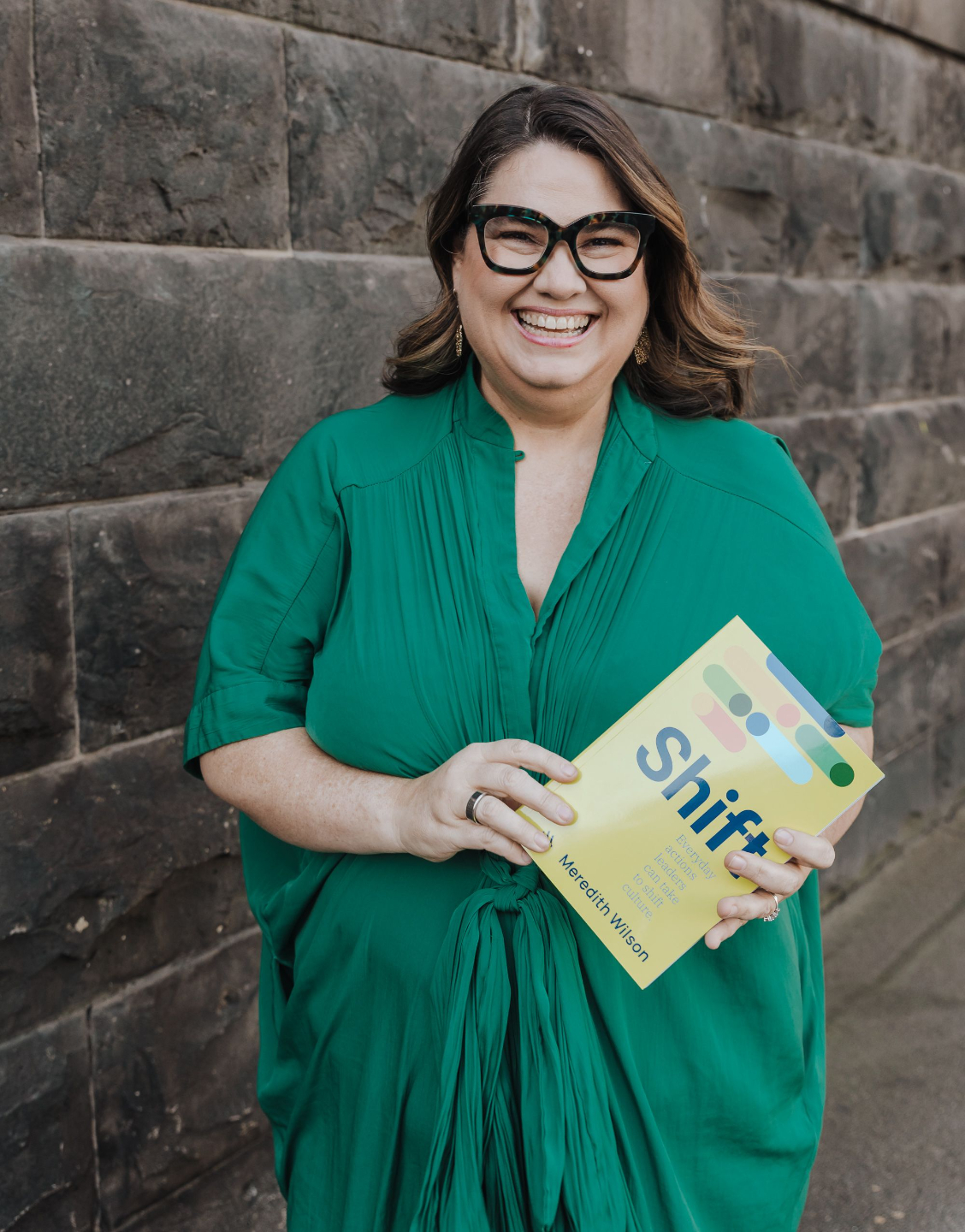
Meredith is the author of Shift: Everyday Actions Leaders Can Take to Shift Culture, a practical guide to making culture simple, tangible and actionable for leaders at every level.
Her depth of experience across people, culture and commercial leadership gives her a distinctive perspective. Grounded in operational reality, sharpened by three decades of practice.
Frequently Asked Questions
Why does culture change take longer than leaders expect?
Culture is the compound effect of small actions repeated over time. It shifts as those daily actions change, which is slower than any announcement. Leaders expect a program to move it quickly; it moves as the everyday behaviours that built it are consistently replaced.
What does it mean that culture is cumulative?
Culture is cumulative means that culture is built through the daily accumulation of small actions, interactions and behaviours that repeat over time. No single event, decision or program creates it alone. The compound effect of what happens, reinforced and repeated, becomes the way things are done. This is why culture is hard to shift quickly and why ordinary days matter more than transformation events.
Why do culture change programs often fail?
Culture change programs often fail because they attempt to override years of accumulated behaviour with a short-term initiative. McKinsey's research on transformation consistently finds that culture is the primary barrier to change. The accumulated layer does not disappear because a new program is launched. Programs that work with the existing accumulation, adjusting what repeats day to day, are more likely to take effect.
How does understanding culture as cumulative change how leaders lead?
When leaders understand culture as cumulative, they stop waiting for the big moment and start attending to ordinary ones. Each meeting, each feedback conversation, each decision about what to tolerate or celebrate becomes a culture signal. The question shifts from “what is our culture change program?” to “what are we accumulating through what we do every day?”
What should leaders pay attention to if they want to shift culture?
The accumulation. Most leaders focus on the big decisions: the restructure, the values workshop, the leadership offsite. Culture shifts in the ordinary moments: how meetings open, how mistakes are handled, how recognition is given, how decisions get communicated. These moments are small and frequent. They accumulate. Leaders who pay attention to what repeats, more than what is announced, are working at the level where culture actually lives.
What's your next step?
Cultureshift™ Masterclass
How leaders multiply culture. 90 minutes online or two hours in person. A practical experience in reading, shifting and leading culture.
Leading Culture
Shape, shift and scale culture. A 12-month program for leaders responsible for making culture work at scale.
Get the book: Shift
Everyday actions leaders can take to shift culture. Practical, grounded and written for leaders who want to act.
Explore More
Related Explainers
The Cultureshift™ Formula Explained — A formula for deliberate culture shift
Moments that Matter Explained — The moments people remember long after the meeting ends
Leaders as Multipliers Explained — Why leadership is the mechanism for culture
Also Published
Boring is Better — Why consistency beats inspiration in culture-building
Stay connected with Meredith
Subscribe to Culture creates Capacity, Meredith’s fortnightly reflections on leadership, culture, and what’s next. Get insights, practical actions, and early access to upcoming events and experiences.
We acknowledge First Nations people both here in Australia and around the world. We have the great privilege of working on lands that have had countless millennia of storytelling, learning, leadership and culture. We pay our deepest respects to the wisdom of Indigenous people and custom past, present and emerging.